 English
  Suomi
Suomi Svenska
 Français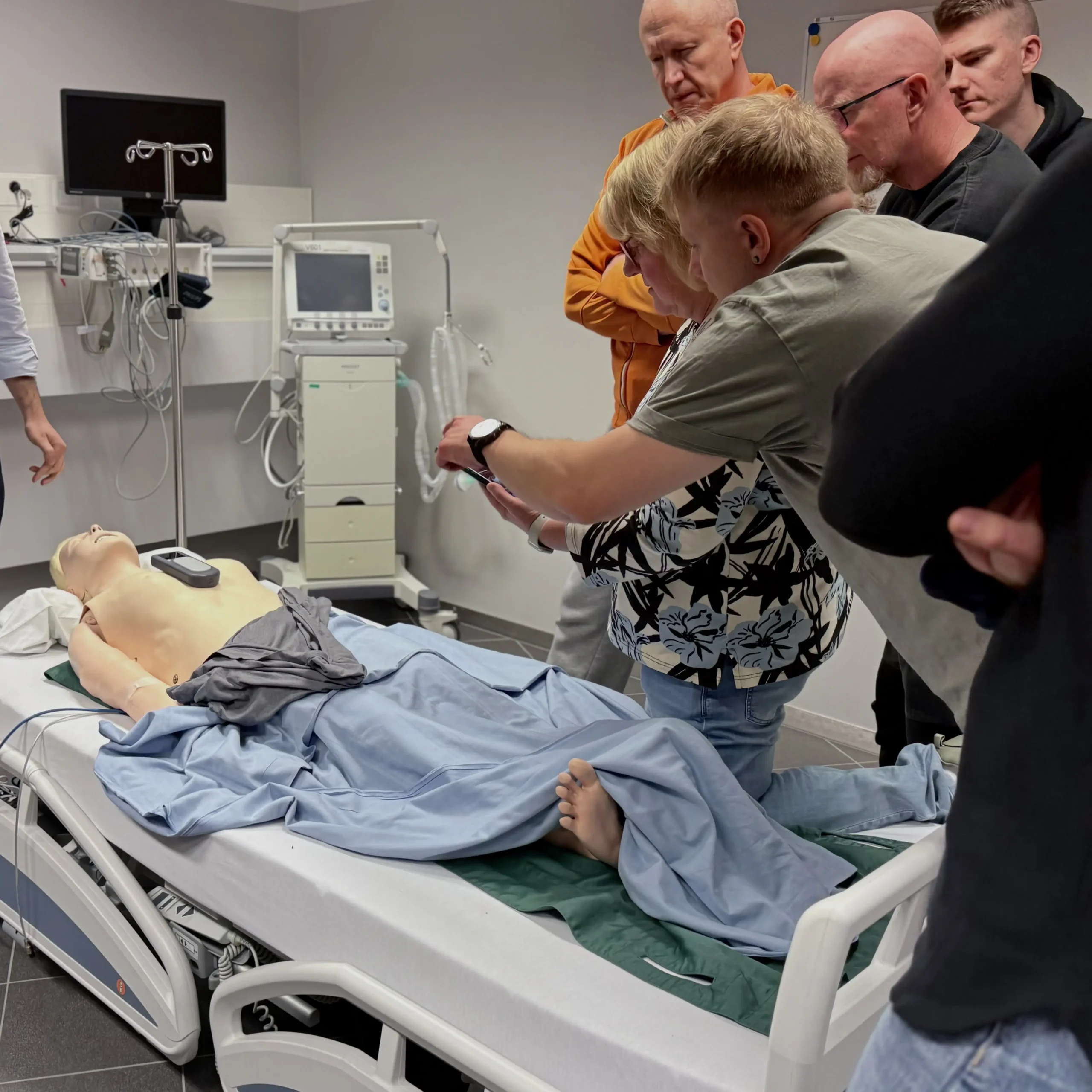
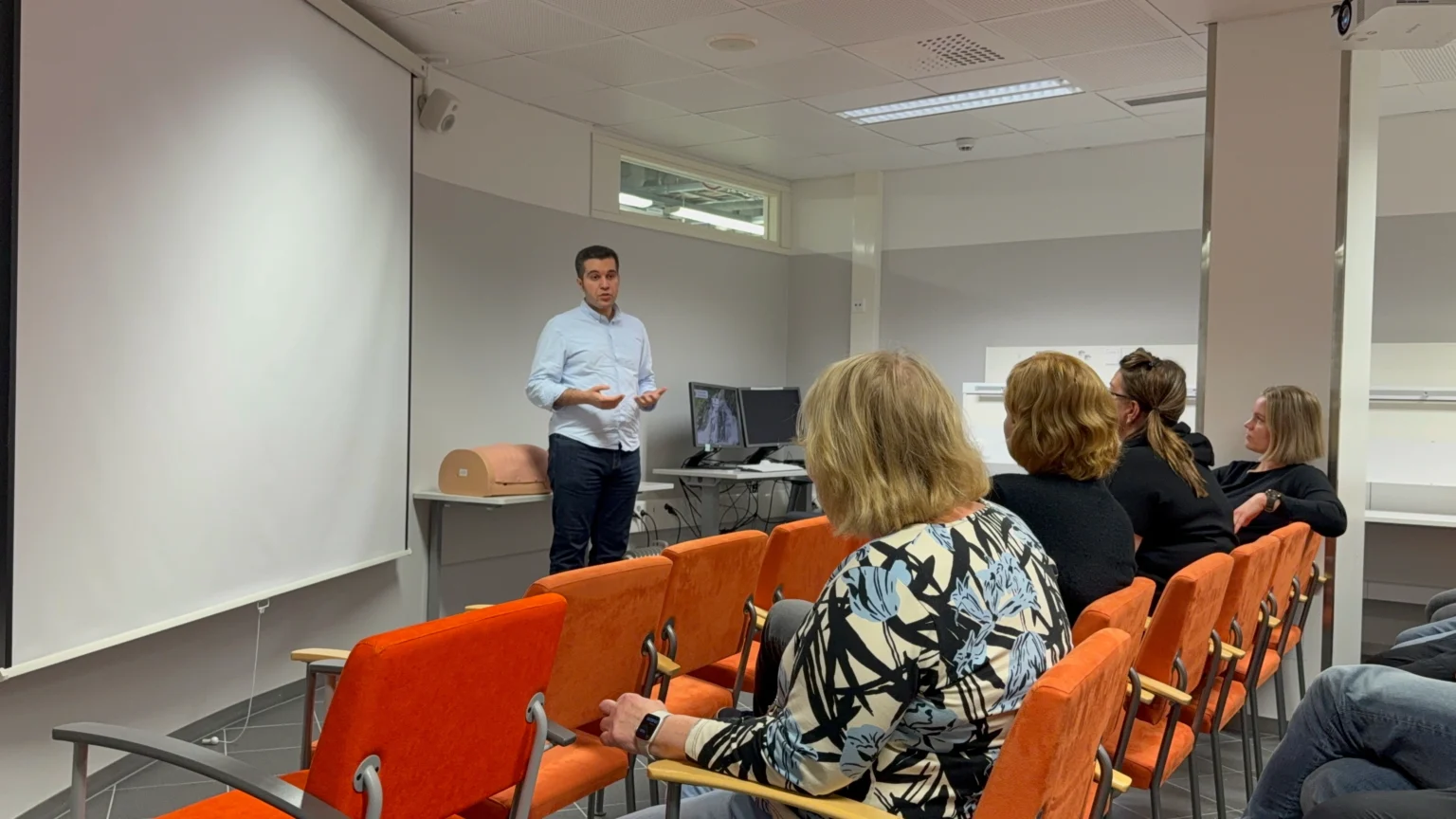
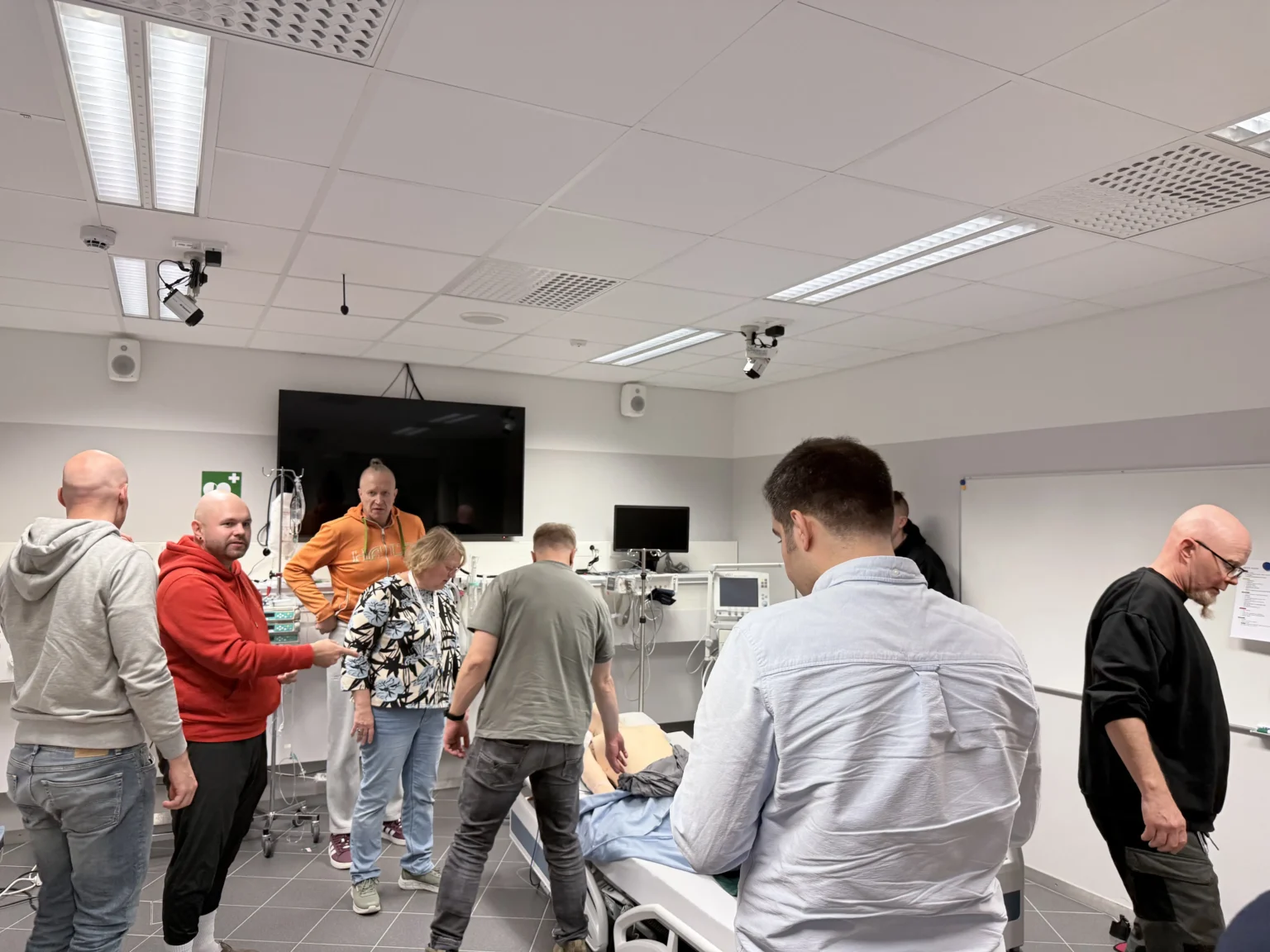
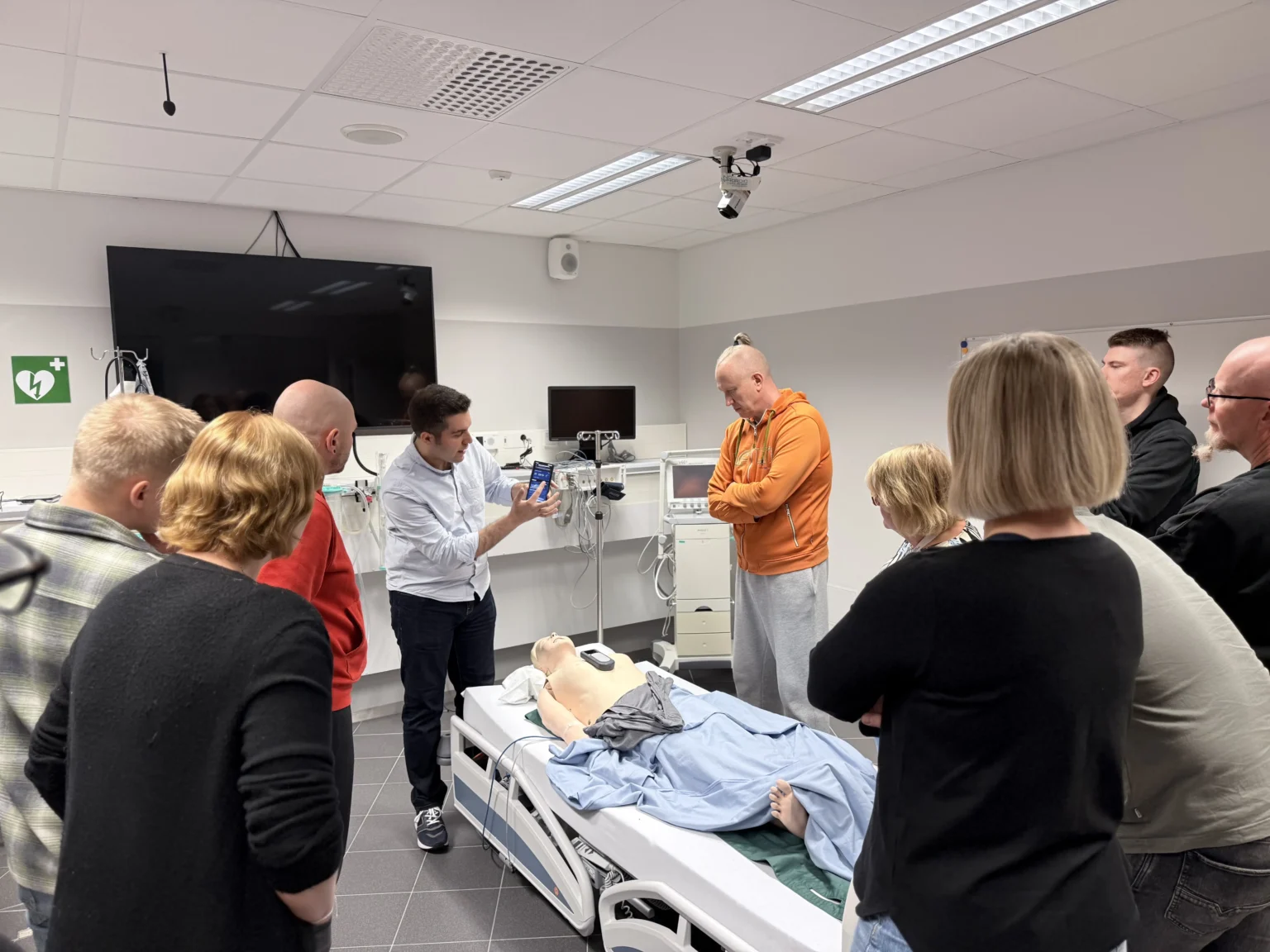
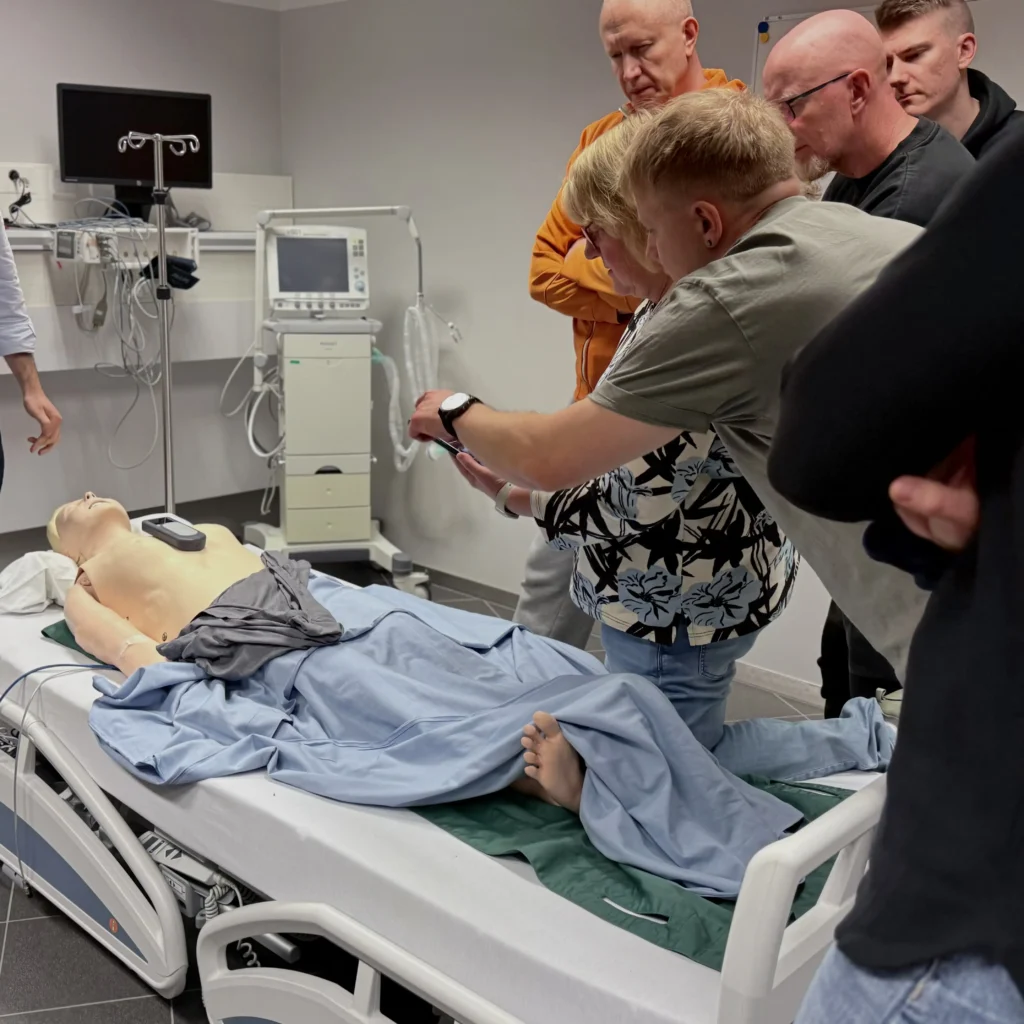
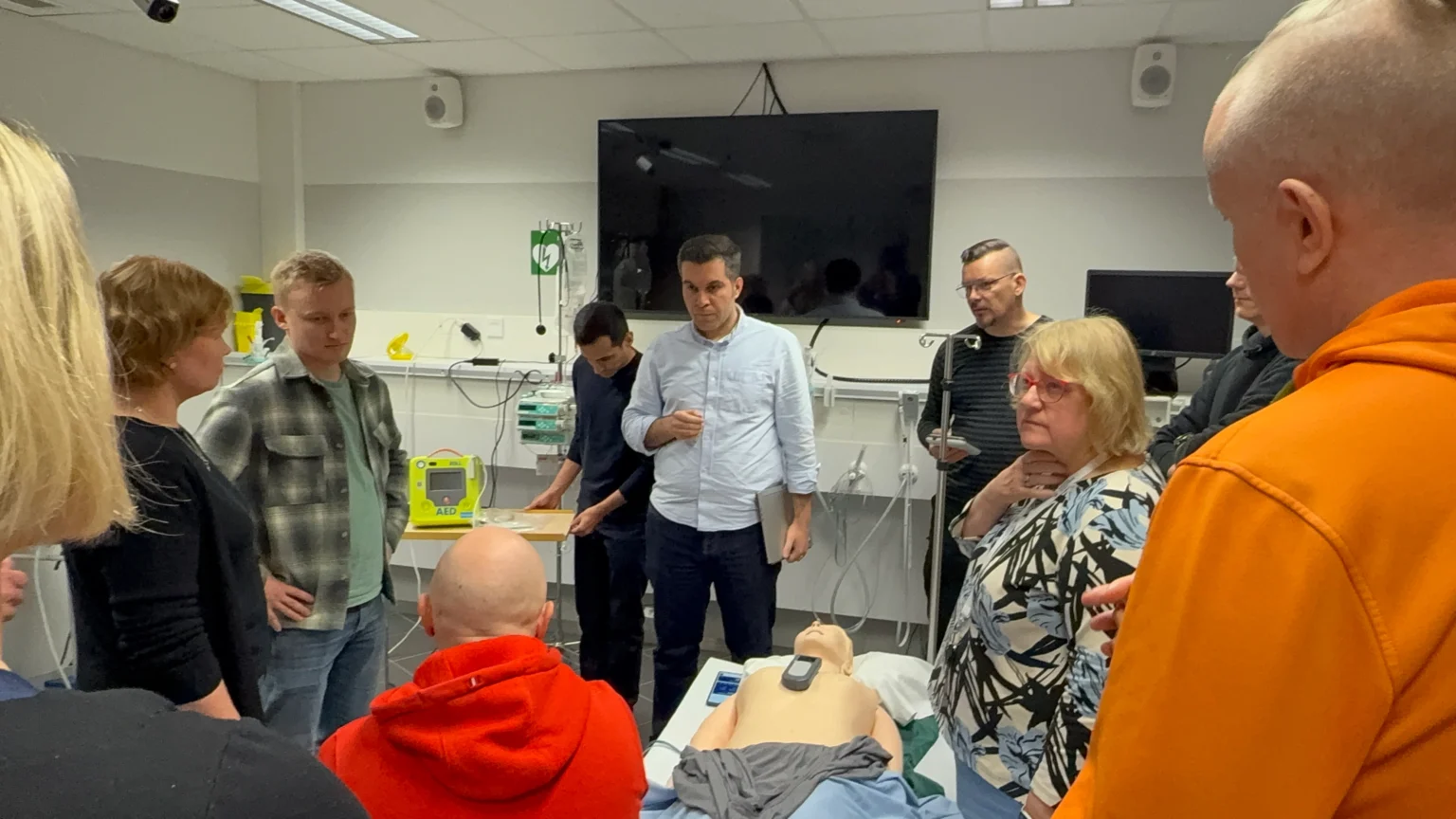
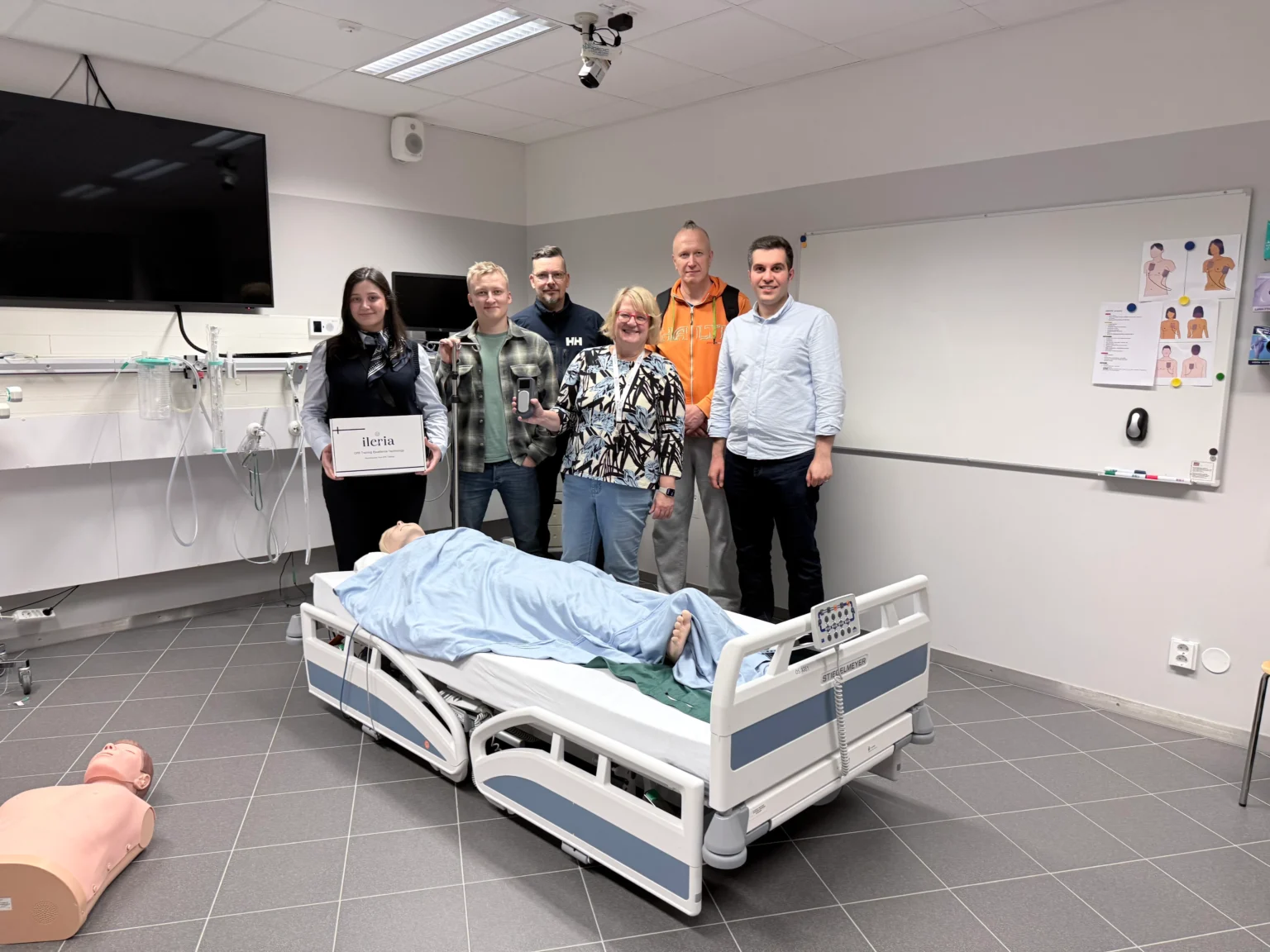
This CPR feedback device usability study was carried out on September 18, 2026 at the Center of Clinical Education at Kuopio University Hospital (Kaarisairaala, Puijonlaaksontie 2, Kuopio). The Ileria team worked hands-on with clinical educators and resuscitation instructors to see how the device performs for professionals who teach CPR every day, and to hear their honest feedback on what works and what should improve.
Why Compression Feedback Matters
High-quality chest compressions are essential for survival after cardiac arrest. As Kirsimarja Metsävainio, MD, Clinical Educator and Consultant in Anesthesiology and Prehospital Care at Kuopio University Hospital, explained during the session, compression feedback is defined in the ERC Guidelines and the Finnish Current Care Guidelines (Käypä hoito) as a cornerstone of both real-life resuscitation and resuscitation training. It gives rescuers feedback on compression quality, depth, rate, and chest recoil.
She also pointed out the limits of current solutions. Voice prompts differ between AEDs and hospital defibrillators, and errors can occur if the chest is compressed too deeply and does not fully recoil. This can increase the risk of resuscitation-related injuries.
For a broader look at the research behind real-time CPR compression feedback accuracy, see our earlier review: Why Ileria’s CPR Feedback Device is Vital for Saving Lives.
What the CPR Feedback Device Usability Study Covered
The Ileria CPR feedback device evaluates force and acceleration from multiple directions to assess compression quality. Its companion app summarizes each session and guides the user with voice prompts.
During the session, participants:
- Performed chest compressions on a training manikin with the Ileria device
- Reviewed the compression results summarized in the app
- Tried the app-guided training flow with voice prompts
- Tested the voice prompts in Finnish
- Discussed comfort, usability, and fit for CPR training and clinical use
What the Clinical Educators Said
Accuracy and feedback
“The feedback which we get from here is quite accurate, precise, and I like how the application summarizes the results of your compressions.”
Kirsimarja Metsävainio, MD
Speaking in Finnish, she summarized her assessment:
“Painelupalaute tällä laitteella oli hyvin lupaavaa.”
(The compression feedback from this device was very promising.)
Kirsimarja Metsävainio, MD
Comfort
“This is very soft, softer than the previous devices, and it is possible to use.”
Kirsimarja Metsävainio, MD
Training potential
“I think the app, if you use it for training, is really easy to use. You can go by yourself, do the thing with the app, and start training. It gives voice prompts and guidance. I think that is something really interesting.”
Member of the clinical education team, Kuopio University Hospital
Measured Session Data
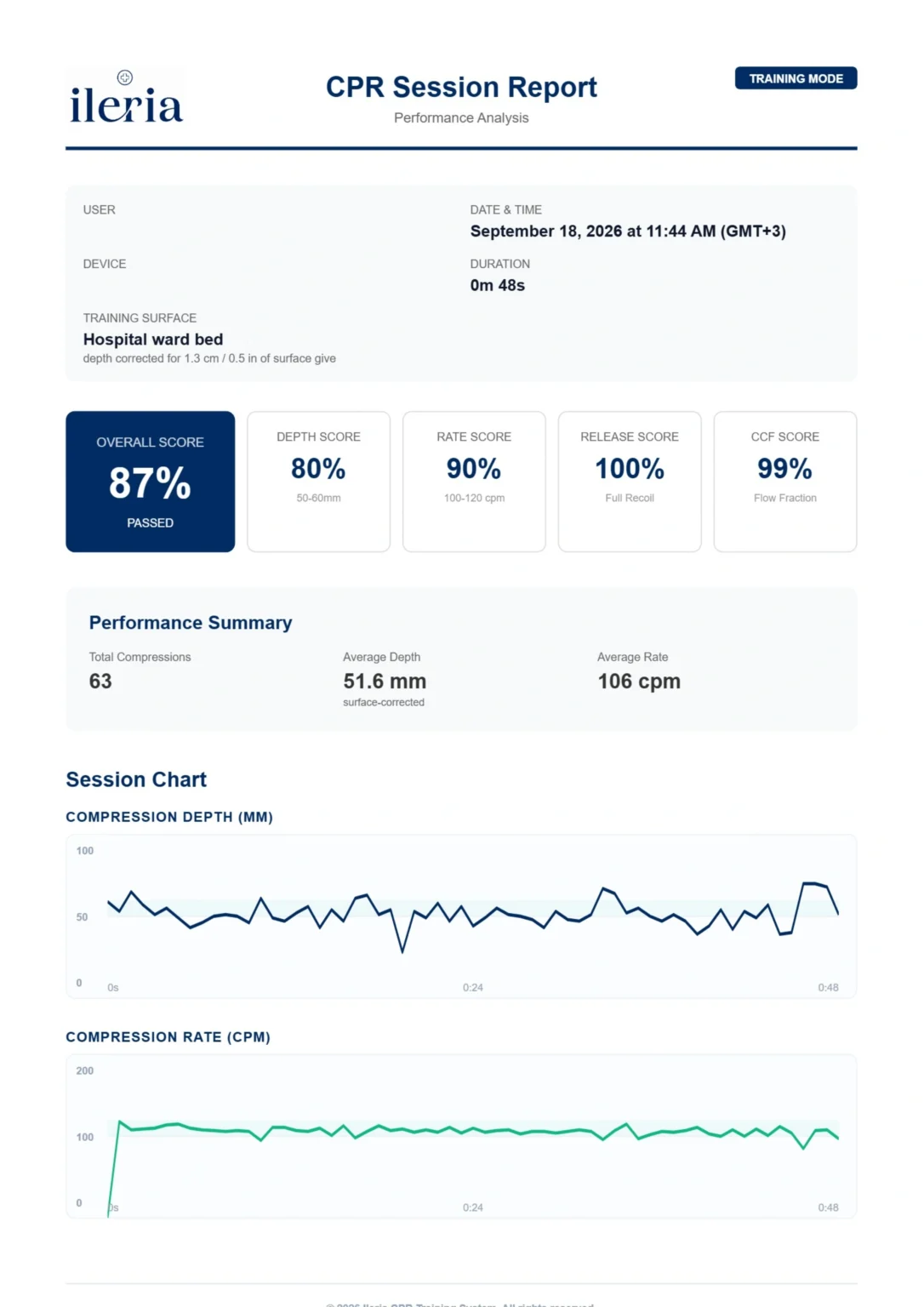
Alongside the spoken feedback, the device recorded objective data. The report below comes from one training-mode session on September 18, 2026, performed on a hospital ward bed during the study.
- Overall score: 87% (passed)
- Depth score: 80%, average depth 51.6 mm
- Rate score: 90%, average rate 106 compressions per minute
- Release and recoil score: 100%
- Chest compression fraction score: 99%
- 63 compressions over a 48-second session
The app also shows exactly how the score is produced, including the thresholds applied to each metric. For clinical educators, this transparency matters as much as the score itself, because it lets an instructor explain to a trainee why an attempt was rated the way it was.
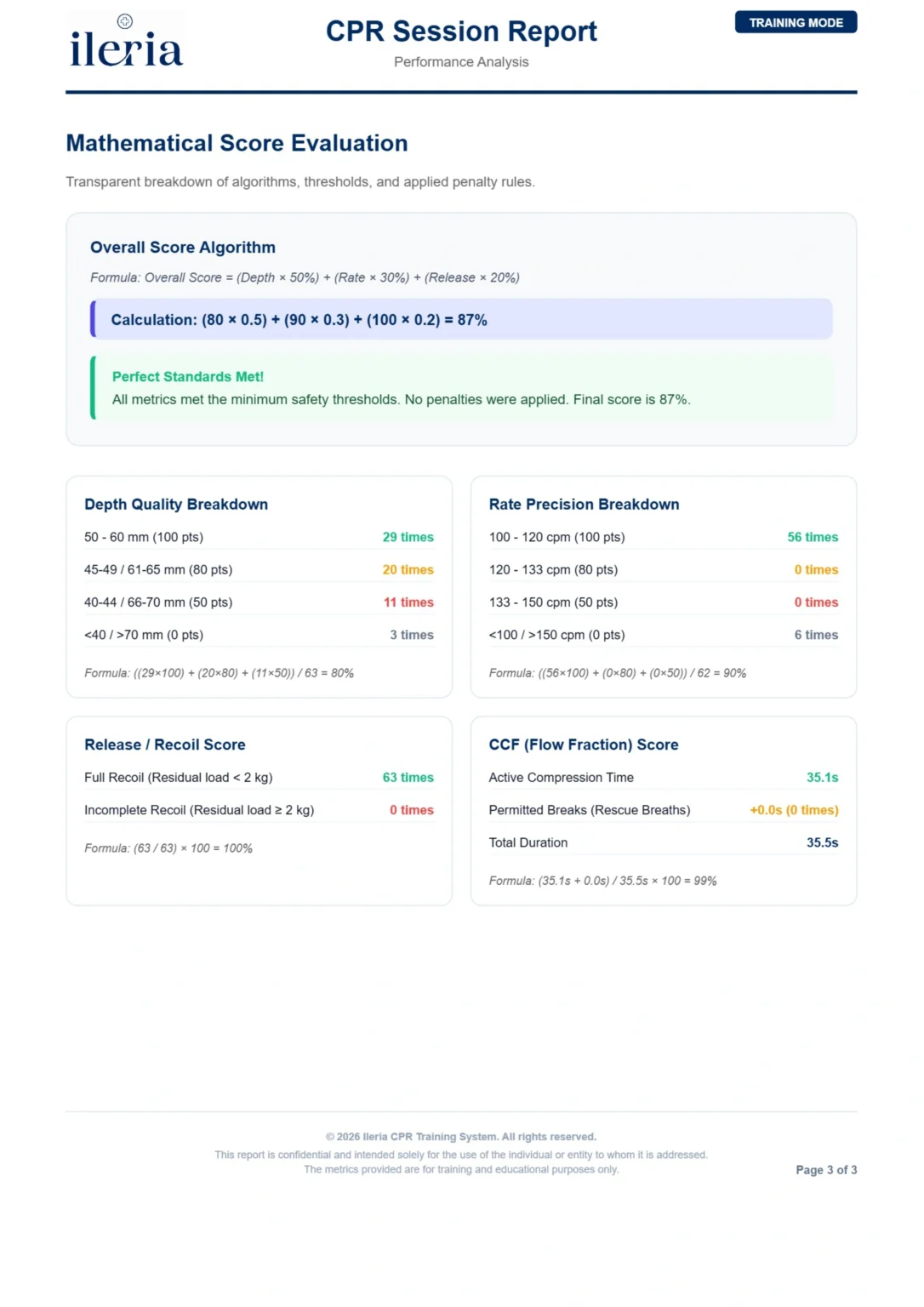
These figures describe a single training session on a manikin. They show what the system measures and reports, not a clinical outcome.
Areas Identified for Development
The most valuable part of the session was the specific, practical feedback on what should change.
Device size
“Maybe the size is the main element which needs to be controlled or developed. Otherwise, this might be very good for training.”
Kirsimarja Metsävainio, MD
Secure attachment during clinical use
For use on a real patient, the device has to stay reliably in place on the chest throughout compressions. Dr. Metsävainio supported the idea of a disposable double-sided adhesive pad that holds the device against the patient’s chest so it cannot slide or fall off during resuscitation.
“I think the fixing there with some kind of tape, which you said will be in the future, might be very good.”
Kirsimarja Metsävainio, MD
Deployment readiness: bundling with defibrillator pads
One participant took that idea further. The suggestion was to make the adhesive pad large enough that it could be pre-bundled with defibrillator electrode pads as a single packaged product. Such a ready-to-use pack could be stored in a first-aid bag or kept directly alongside the AED. In an emergency, the responder would simply apply it to the patient’s chest and begin, with no separate setup step.
This is a strong insight, because it addresses something beyond the device itself: how quickly life-saving equipment can be deployed under pressure.
Improving the Finnish voice prompts together
“I think there are some corrections we can make, but it’s quite good.”
Member of the clinical education team, Kuopio University Hospital
This turned into the most hands-on part of the collaboration. The team did not simply report that the Finnish wording could be better. They worked through the voice prompts with us and helped us correct the translations, so that the spoken guidance sounds natural and clinically correct to a Finnish rescuer. For a device that gives instructions out loud during a resuscitation, wording is not a cosmetic detail. It has to be understood instantly and without hesitation.
Key Takeaways
- Compression feedback was described as quite accurate, precise, and very promising.
- The app’s session summary and voice-guided, self-directed training were seen as strong fits for CPR training.
- Participants found the device softer than devices they had used before.
- Three development priorities emerged: device size, a disposable adhesive for secure attachment to the patient, and the option to bundle with defibrillator pads for emergency readiness.
- The team also helped us improve the Finnish voice-prompt translations directly, turning a language issue into a concrete fix during the collaboration.
From Feedback to the Next Iteration
The results of this CPR feedback device usability study feed directly into the next design iteration of Ileria. The Finnish voice prompts were the fastest win, because the clinical educators helped us correct the translations on the spot. The session also sharpened our thinking on two deployment questions: how the device stays securely attached to a patient during compressions, and how it can be packaged so that it is ready to use the moment it is needed. Device size remains the main hardware priority.
This work continues our hands-on collaboration with Finnish healthcare and rescue professionals, following our pilots with Tays Heart Hospital, the Finnish Red Cross Tampere Branch, and the Sääksjärven-Kuljun VPK fire department.
“Clinical educators and emergency professionals see CPR up close, in training and in real cases. The team at Kuopio University Hospital did not just tell us what worked. They told us how the device should attach to a patient and how it should be packaged so it is ready in an emergency. That kind of feedback is exactly what makes a product better.”
Amir Bathaei, Founder & CEO of Ileria
About This CPR Feedback Device Usability Study
This was a qualitative CPR feedback device clinical evaluation in a clinical-education simulation setting, using a training manikin and a development version of the device. It was not a clinical trial, and no patients were involved. The findings reflect the professional impressions and suggestions shared by participants during the session, together with the session data recorded by the device. Quotes have been lightly edited for clarity.
Acknowledgements
We sincerely thank Kirsimarja Metsävainio, MD, and the clinical education team at Kuopio University Hospital for their time, expertise, and candid feedback, and in particular for helping us improve the Finnish voice prompts.
Would you like to run a CPR feedback device usability study with your own training team? Contact us.